IN FOCUS Australia’s #1 free lifestyle app is mapping violence against women. So why is no one talking about it?

BY: Kartya Vucetic
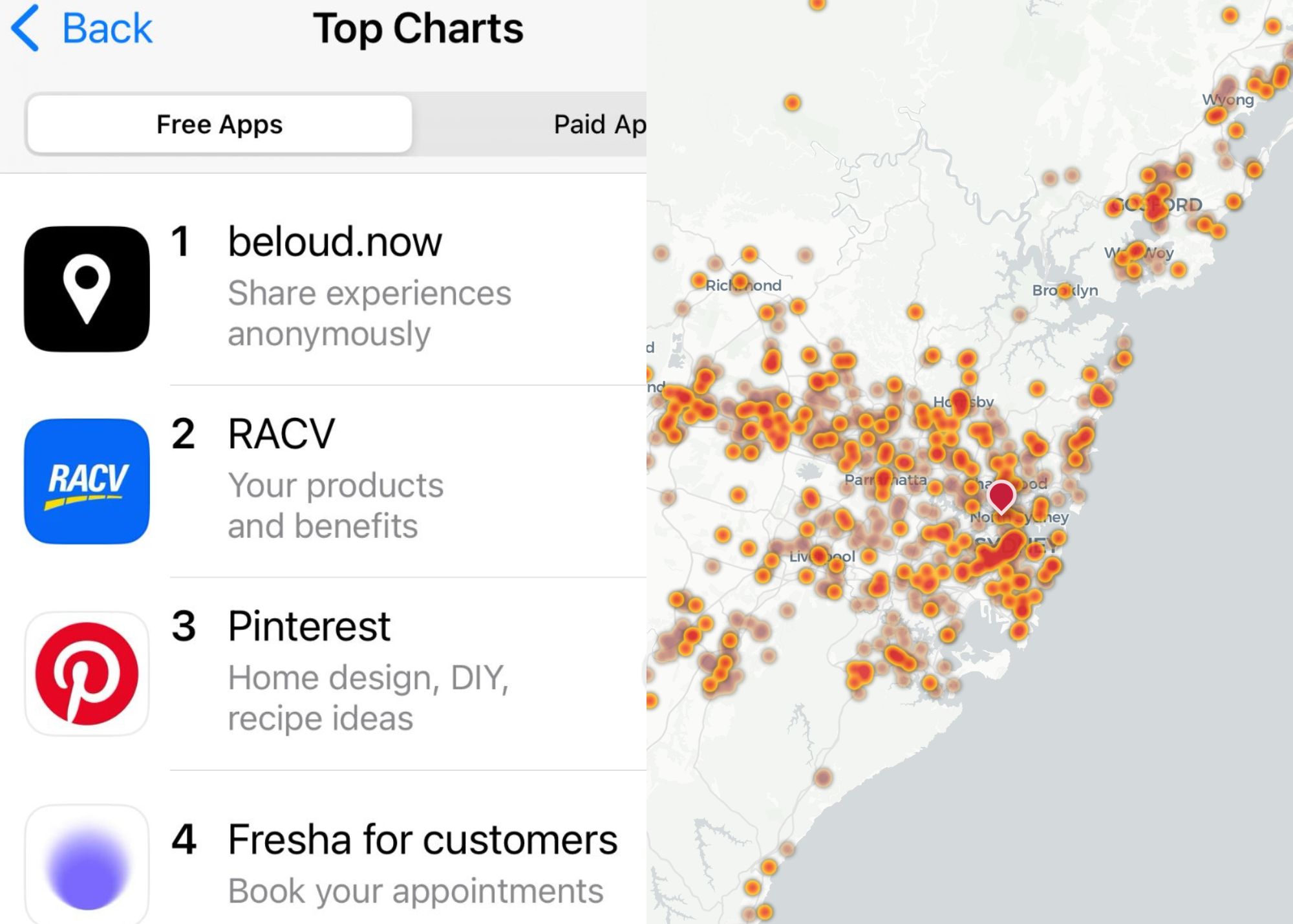
Australia’s number one free lifestyle app right now isn’t a dating app, a wellness tracker or a real estate marketplace.
It’s a map of violence against women.
beloud.now allows users to anonymously mark places where they have experienced harassment, stalking, threats, physical violence or have simply felt unsafe. There’s no account, no name attached and no requirement to make a formal report. You drop a pin, select what happened and the experience becomes part of a growing collective map.
Australians are suddenly downloading it in huge numbers.
At the time of publication, So Sydney! can reveal that beloud.now is sitting at number one in the free lifestyle category on Australia’s App Store. It’s a remarkable feat for an independent app. Having only launched in April this year, it’s received essentially zero mainstream Australian media coverage.
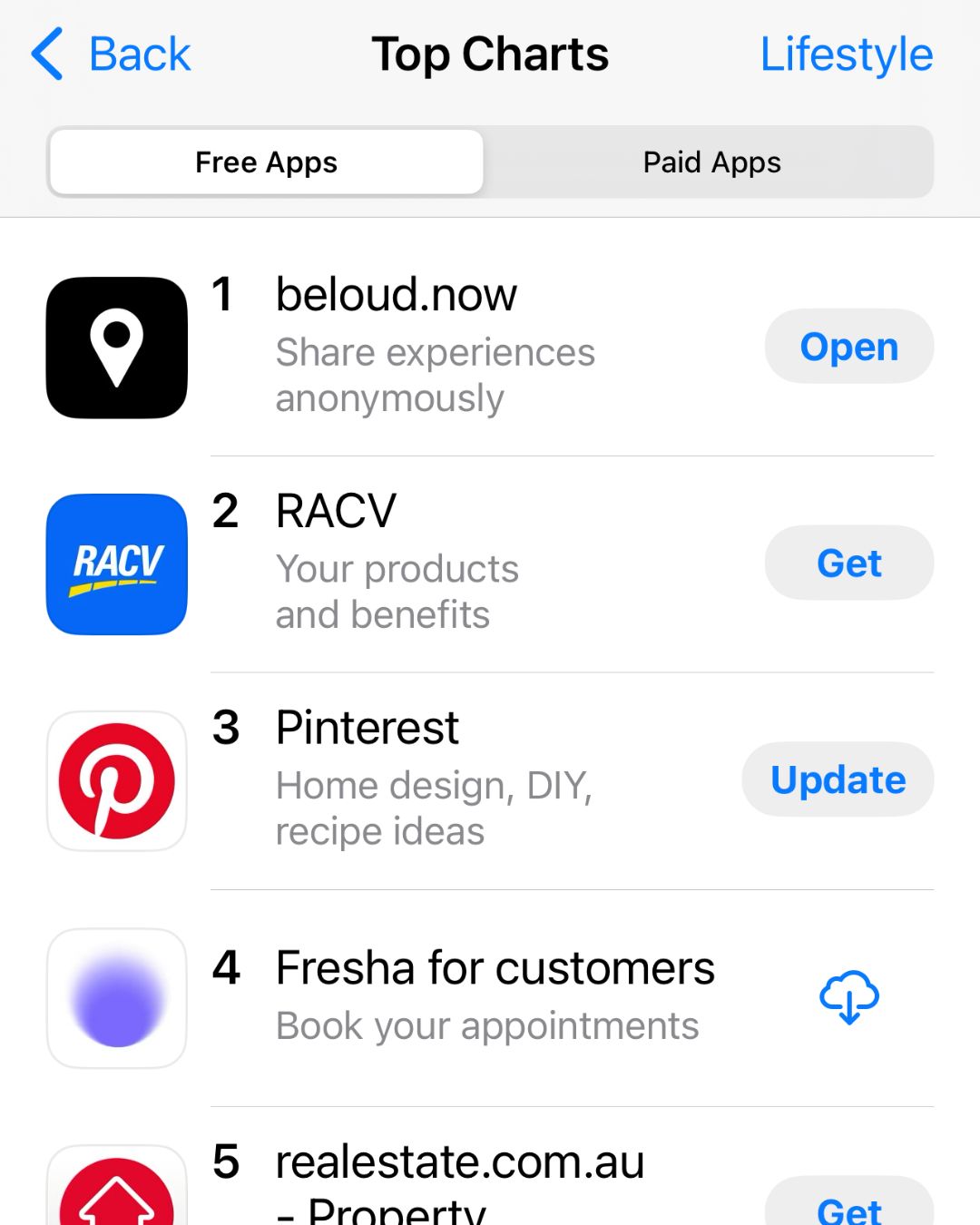
A current screenshot of Australian unpaid lifestyle charts on the App Store
The idea is deliberately simple…
beloud.now began life in Germany as laut.jetzt. It was an independent project designed to make gender-based violence against women and FLINTA* people visible.
Users can report six broad types of experiences: harassment, stalking, threats, physical assault, feeling unsafe or another experience. Reports can relate to something that happened today or years ago. Users can also add contextual information including whether the person involved was known to them, and whether misogyny, racism or transphobia may have played a role.
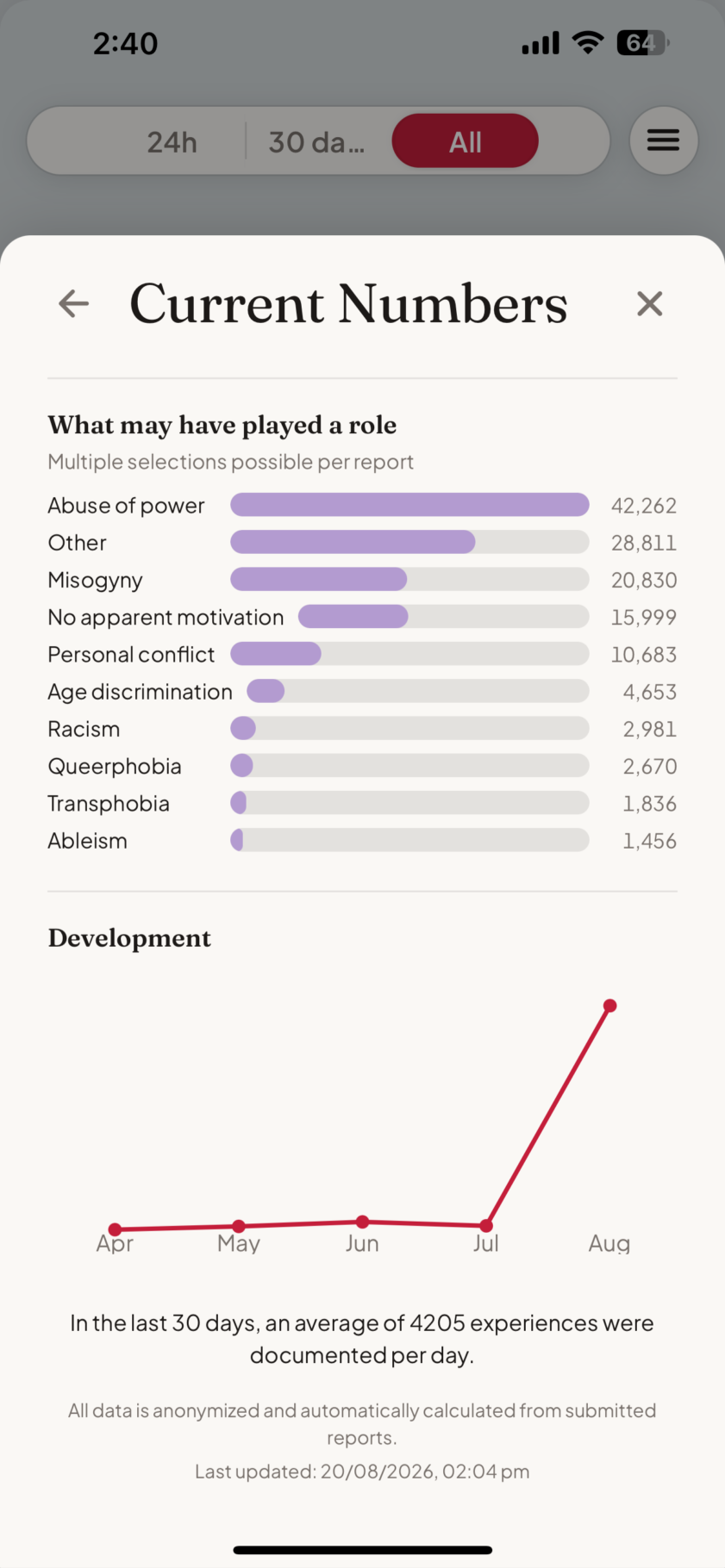
The app continues to show updated global statistics to users
The location itself is intentionally imprecise. According to the platform, coordinates are rounded to an approximately 150-metre grid before being stored. No account, IP address or device identifier is kept.
In other words, the result is not intended to be a crime map. Beloud.now explicitly states that reports are not conventionally verified, data cannot be regarded as official statistics, and the app is not a substitute for police or emergency services.
What it is trying to document, however, is something much harder to capture: experiences that happened, affected someone, and may otherwise never become visible anywhere.
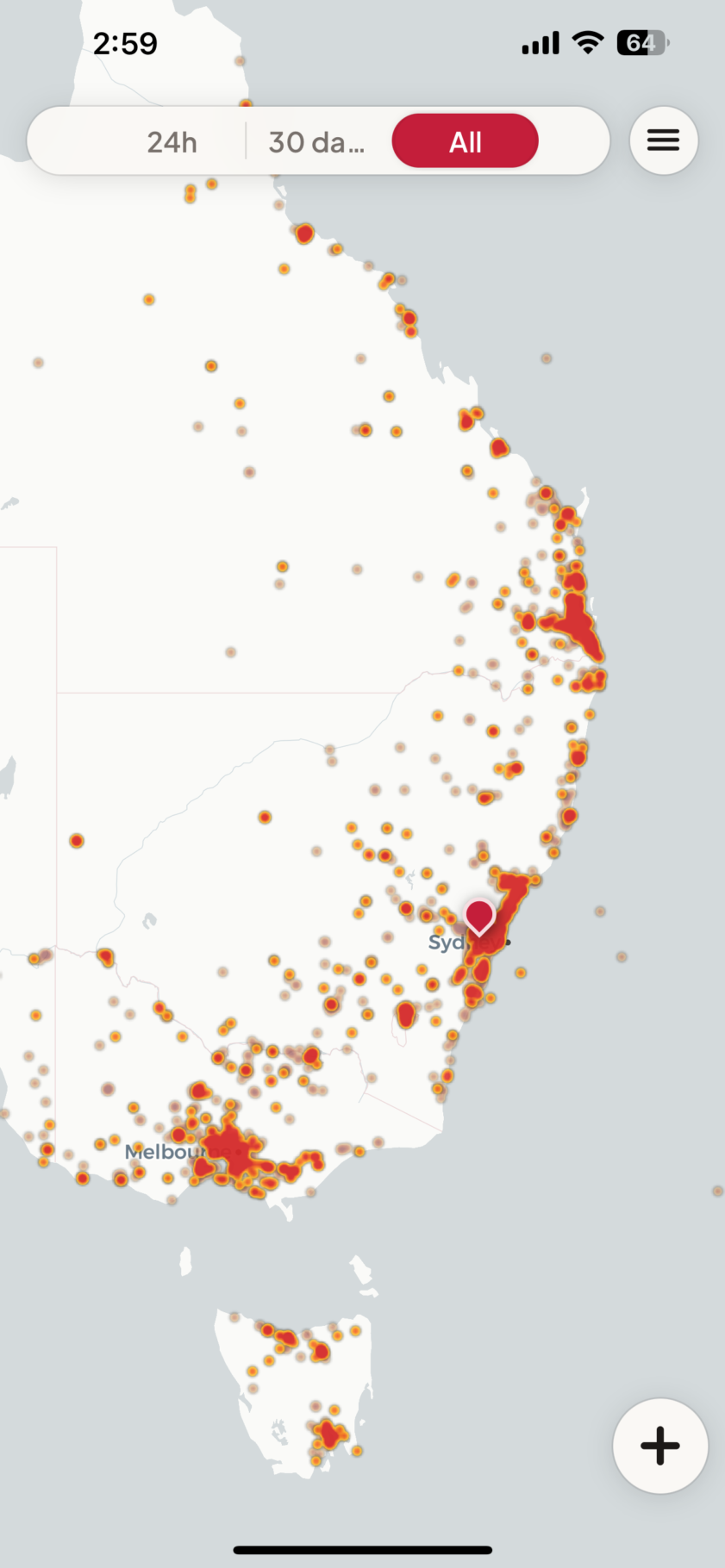
An example of pins made on the map in the East Coast of Australia
Settings allow an individual to filter pins by their date of occurrence (up to as recently as 24 hours). However, the map also enables users to view all pins historically made. Users can enter an experience from years earlier, with the oldest pin recorded currently dating back to the 1960s.
At time of publication, there are 115,908 unique devices registered on the app, with over 135,692 documented experiences across the world. In the last 30 days, an average of 4,205 experiences were documented daily.
So, who’s behind it all?
Behind the app is German developer Lydia Ickler, who built the project around a fairly simple premise. Sexual violence does not simply disappear because the moment itself has passed.
In videos explaining the platform, Ickler has spoken about wanting to make those experiences visible after they happen. The secondary impact is to collectively show just how often they happen.
Since then, what began as an independent German project launched back in April has now received international pickup, with beloud.now available in 38 languages. At the time of publication, Ickler has zero involvement with advertisers or investors, and the app remains completely free to use.
Why does this matter for Australians?
Australia does not need another statistic to demonstrate that violence against women is a serious problem. This week’s news headlines alone prove that point.
This year so far, Australian Femicide Watch has reported the death of 45 women and 19 children from domestic violence. In 2024, police recorded 40,087 victims of sexual assault across Australia. The ABS Personal Safety Survey estimates that 22% of Australian women have experienced sexual violence since the age of 15.
And all of these statistics just record those reports formally made to police.
Many experiences of harassment, assault and feeling unsafe are never formally reported. Reasons range from fear and shame to the emotional burden of going through a police process.
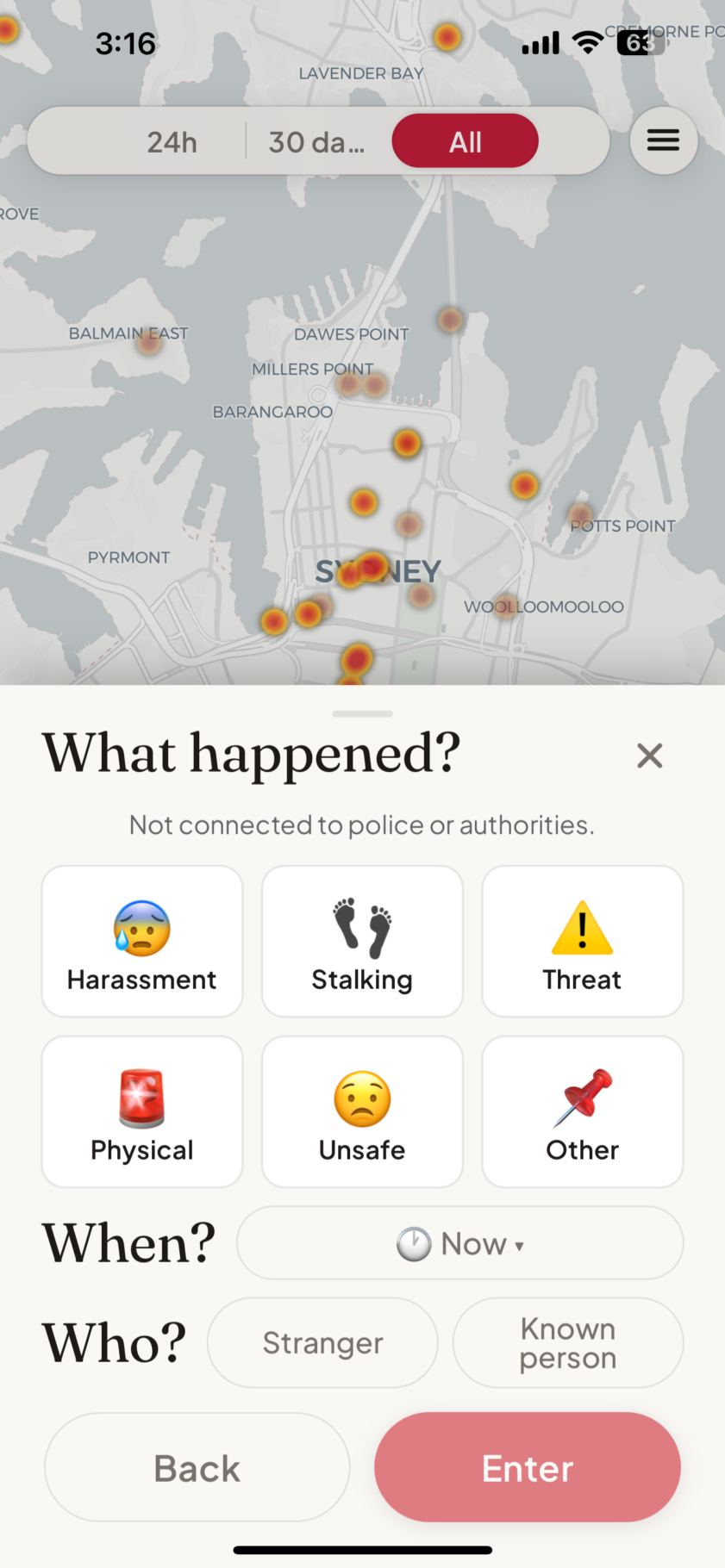
An example of reporting on the beloud.now app
That is the gap beloud.now is trying to bridge. It gives women a way to record what happened anonymously, without creating an account or making a formal report. It cannot replace police data or establish that a crime occurred, but it can make visible experiences that may otherwise never appear on the record.
Taken individually, each pin is one person’s account. Taken together, they can begin to reflect something official datasets often struggle to capture: the scale and geography of experiences that are happening but never formally reported.
But there are obvious questions…
The platform’s anonymity also creates obvious challenges. Reports are not independently verified, anonymous systems can be misused, and a pin appearing near a business or residential address should not automatically be read as an allegation against the people connected to that location.
beloud.now attempts to reduce that risk by deliberately blurring locations, rounding reports to an area of roughly 150 metres rather than displaying an exact address, and limiting location-based submissions to one-per-hour to help prevent spam and manipulation.
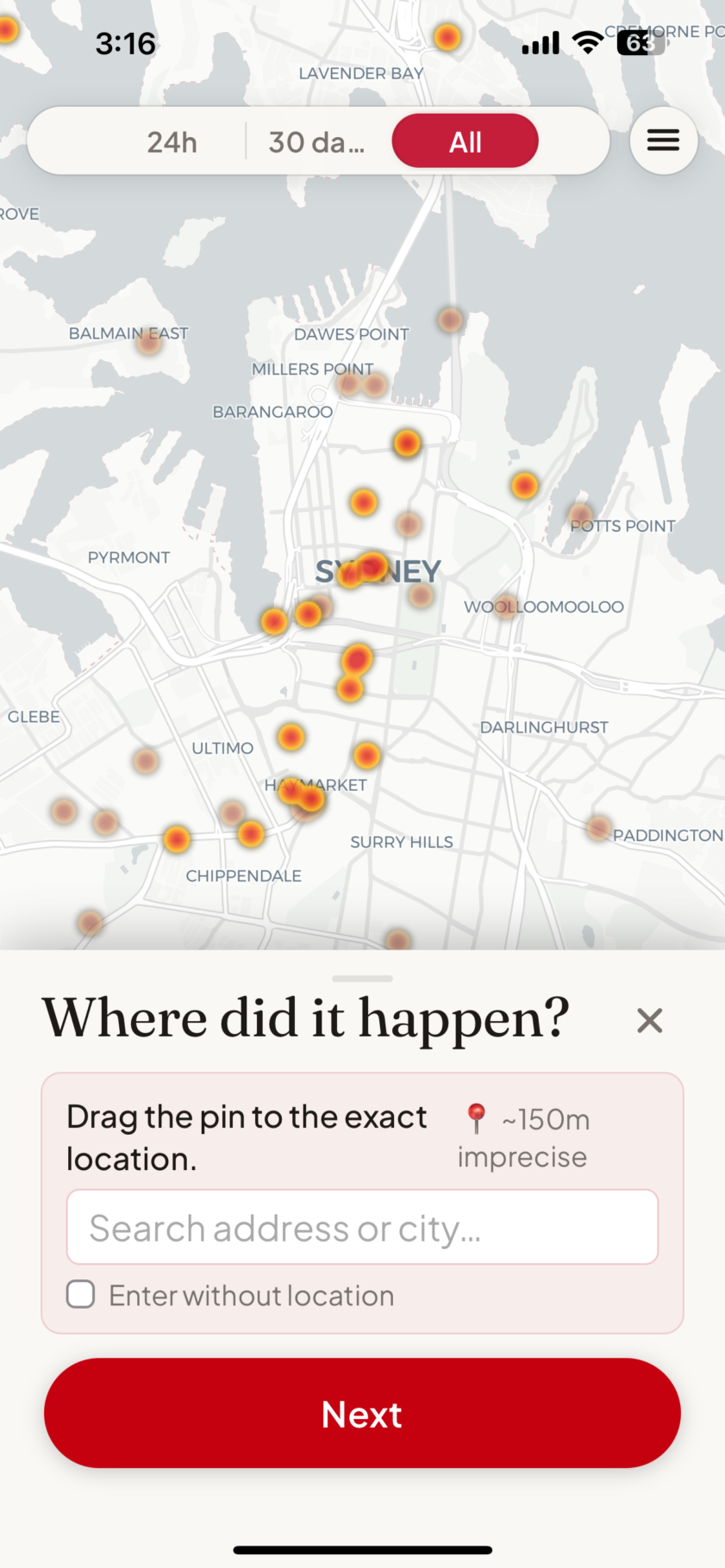
Each location is kept intentionally broad to 150m to prevent defamatory concerns
From a legal perspective, a report is not automatically defamatory simply because it appears on the map. The app does not name alleged perpetrators, identify businesses as responsible or present entries as proven criminal conduct. The legal position would become more complicated only where the information shown was specific enough that an ordinary reader could reasonably understand it as making a damaging allegation about an identifiable person or eligible small business.
In other words, the platform is designed to map where experiences occurred, not to publicly accuse the person who lives, works or operates nearby.
And Sydney is already filling up…
Open beloud.now over Sydney and pins are already spreading across the map.
They appear through the CBD, nightlife areas, transport corridors, residential suburbs and across wider Sydney.
We are deliberately not naming individual businesses based solely on anonymous pins. The reports are unverified, locations are intentionally blurred and their presence near a venue does not establish that the venue, or anyone connected to it, was responsible for what occurred.
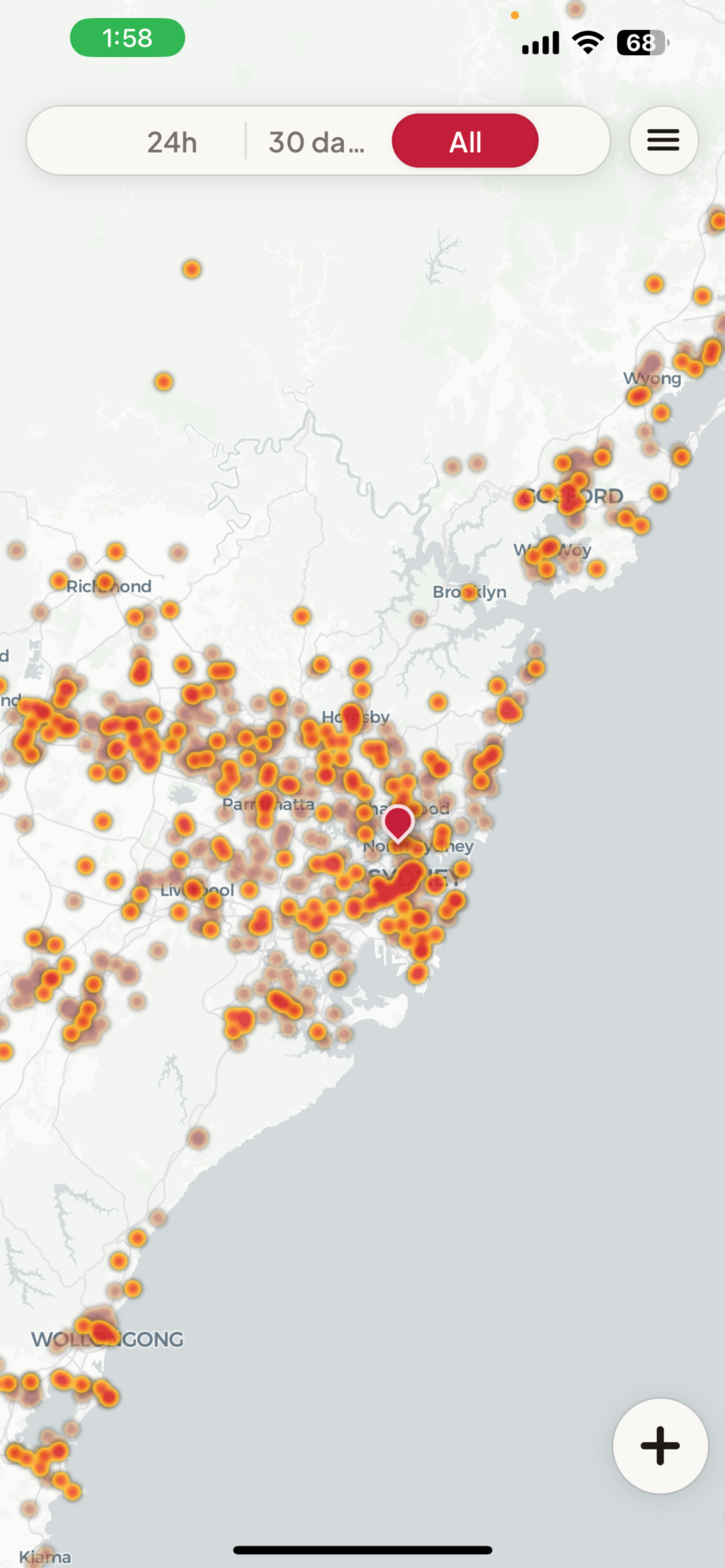
Zooming out to view Greater Sydney shows a jarring reality
But zooming out tells its own story.
Australia has spent years describing violence against women as a national crisis. The scale is well established, but what remains harder to see is how much of it never enters a police report, a court file or an official statistic.
beloud.now will not solve that crisis. But its appeal is that it gives women a low-barrier option to record what happened, safely and anonymously, and allows those experiences to sit alongside thousands of others rather than disappear from view.
And if a relatively simple app can help make that hidden part of the crisis more visible, all while becoming Australia’s number one free Lifestyle app in the process, why is nobody talking about it?