CIVIC IDIOCY City Of Sydney removes buskers to make room for more dumped e-bikes

BY: Kartya Vucetic

Sydney’s latest crackdown on buskers has once again proven that the city’s cultural pulse is being strangled by red tape, and once again, it’s all under the guise of “pedestrian safety”.
What’s happened?
In October, Clover Moore introduced new restrictions on busking across the CBD. Under the new rules, only six “special busking sites” are permitted along George Street, and performers are limited to one hour. The times at which musicians can perform have also been reduced to between 11am and 10pm, instead of the previous 8am to 10pm window.

Image: Instagram @shirinaholmatova
The reason? Per an official statement from the City of Sydney, it’s to “manage busking activity to balance public safety and harmonious shared use of the spaces”. Apparently, buskers operating near the light rail posed a pedestrian safety risk, which, if you ask me, feels like a pretty solid stretch.
What’s been the response?
Community feedback came through swiftly. Local musicians, including viral TikTok busker Ūla Music, called the decision “a gut punch” to Sydney’s culture. She argued that live street performance is one of the few remaining signs of life in the CBD. She’s not wrong. The ban follows years of sound restrictions, liquor lockouts and permit overhauls that have collectively reduced the city’s cultural output to a faint echo.
And yet, while Clover claims to be protecting pedestrians from the threat of acoustic guitars, the local government remains almost proudly complacent about the irony of the real obstacles littering Sydney’s streets. Namely, the piles of dumped e-bikes turning every footpath in the CBD into a low-budget obstacle course.
At best, the clutter is an eyesore and an inconvenience.
In reality, it’s a serious accessibility issue…
We spoke to disability advocate and content creator Shane Hryhorec, who’s spent years documenting the difficulties of navigating life in a wheelchair. Last week, he posted on Instagram to show the sheer absurdity of moving through Sydney’s pavements: dodging poles, poorly designed crossings, and, of course, strewn e-bikes.
“Getting around is horrendous,” Hryhorec tells us. “Footpaths are public premises under the Disability Discrimination Act, and they’re supposed to be unobstructed”.
He’s right. Under section 23 of the Disability Discrimination Act, footpaths are legally considered public premises, meaning they must be kept clear and accessible at all times.
“Everyone blames the users,” he says. “But it’s the job of the e-bike companies and the government to make sure the system works. In France, in cities like Grenoble, you can’t even end your ride unless you park in a designated space. It’s enforced automatically. The technology already exists, Sydney just hasn’t bothered to use it”.
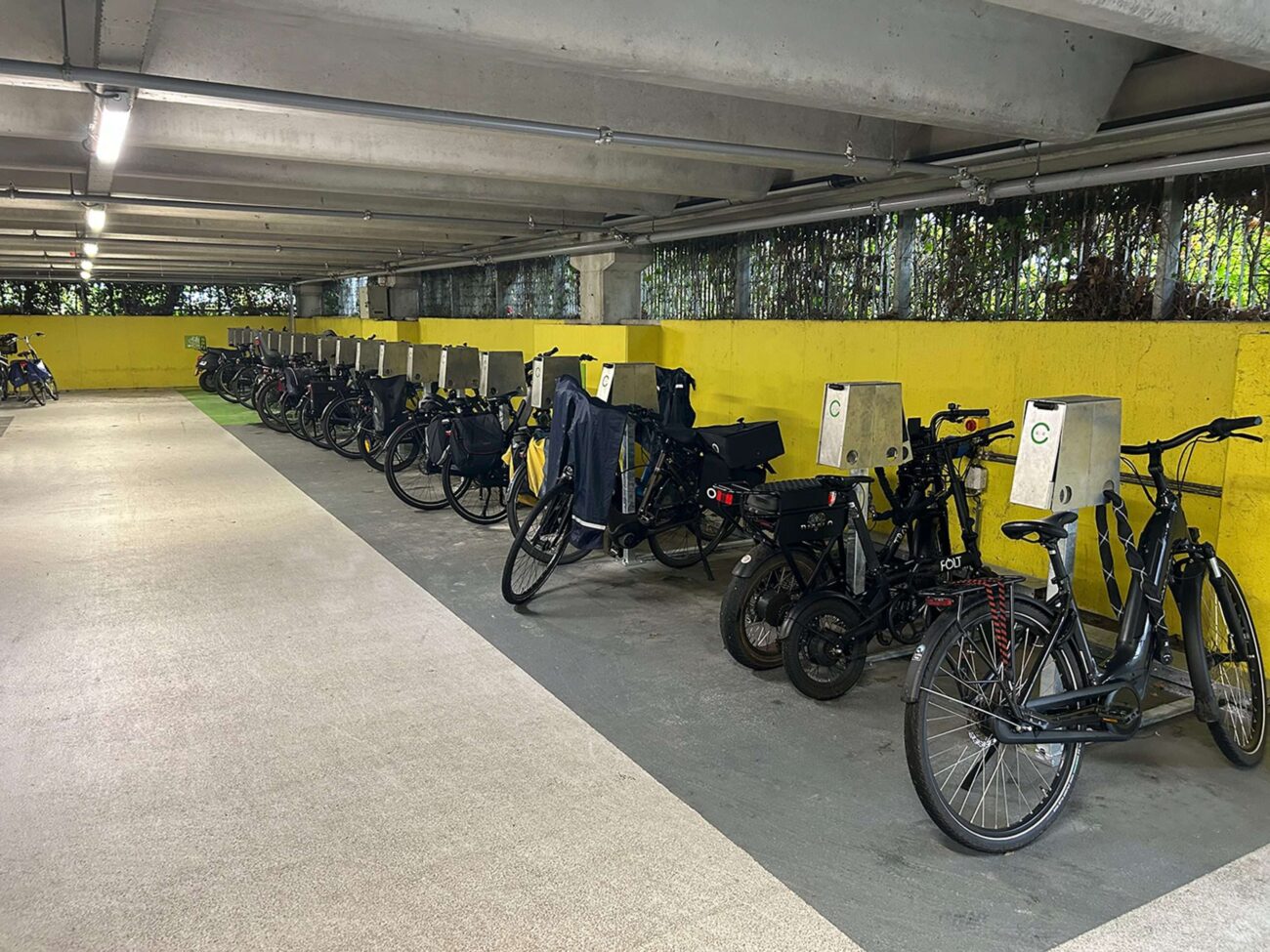
e-Bike stations have become policy in many cities such as Grenoble | Image: Street-Stuff
How can we enforce better policy?
As Shane points out, if we have the resources to tow a car within five minutes of it sitting in a no-stopping zone, surely we can clear a few e-bikes off the footpath.
“They’ve already got the trucks, the storage, the fines, the whole system in place. The same could be used for e-bikes. They just don’t bother,” he says.
Which brings us back to the buskers. Sydney’s always quick to silence the very things that make it vibrant. The street music, the late-night venues, the chaos that gives the city character, all while turning a blind eye to the actual barriers in people’s way. Regulating joy has become such a pattern that it’s policy.
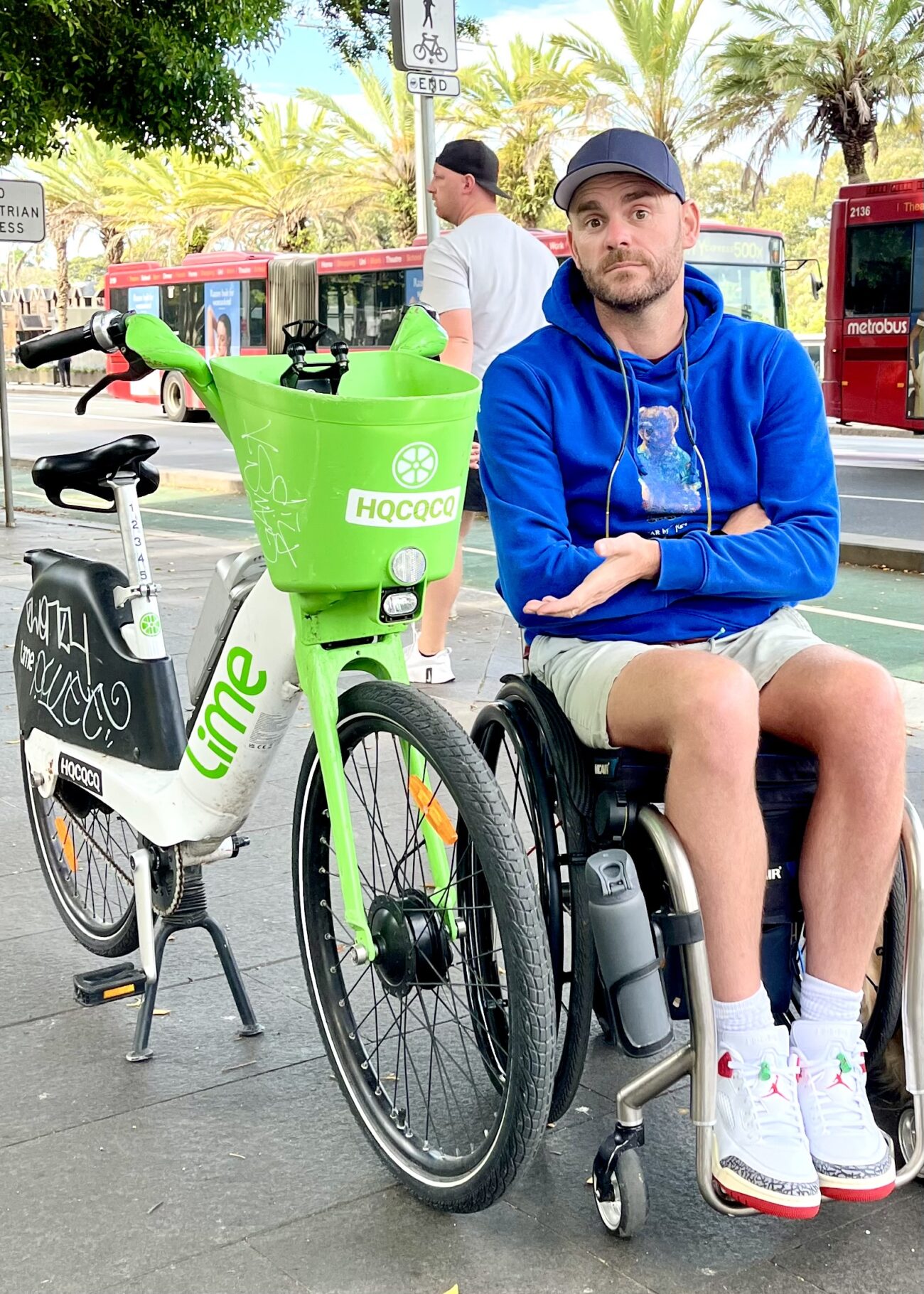
Image: Shane Hryhorec
But when the issue involves corporate-backed transport schemes or tourist optics, the urgency evaporates. That refusal, as Shane says, is part of a broader problem: one where rules are enforced when it’s convenient, but ignored when it might cost money.
Until then, it seems Sydney’s culture, and its accessibility, will both remain on mute.